Cristina Comas receives the Food Tech Award at the 8th MujerAGRO Awards
Scientific innovation and sustainability driving the future of horticultural agriculture
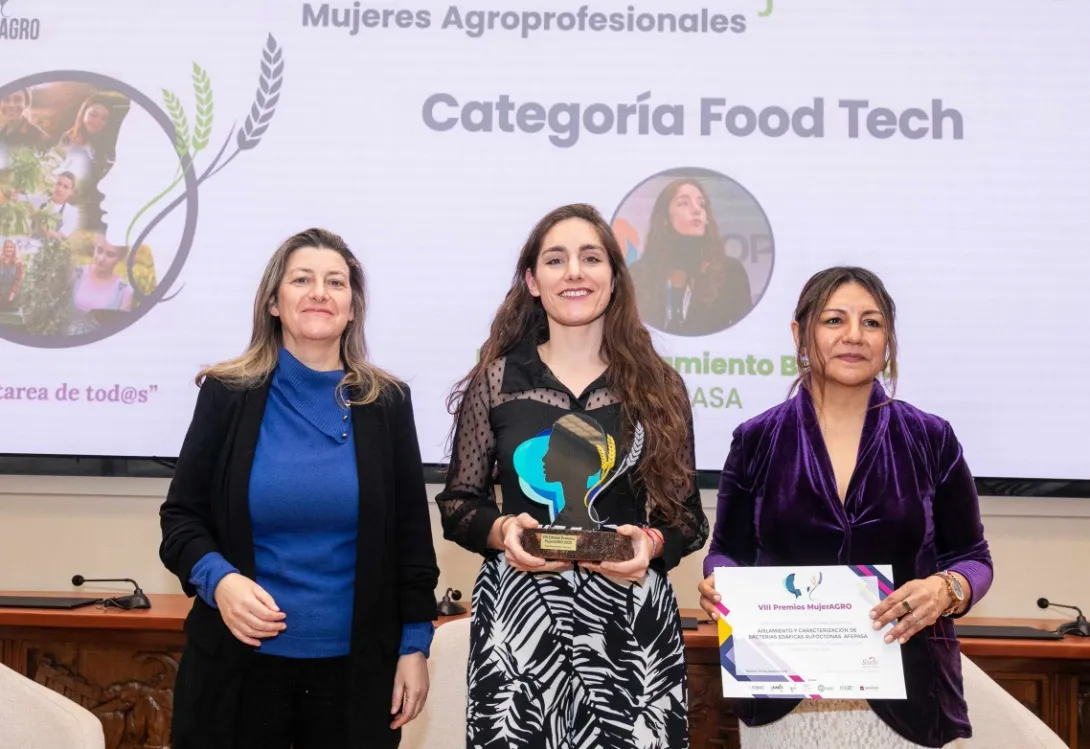
The award recognizes a project that combines research, innovation, and sustainability to improve the nutritional efficiency of horticultural crops.
Cristina Comas Micolau (Teruel, 1995), PhD in Biotechnology and Head of Microbiology at Afepasa, has received the Food Tech Award at the 8th MujerAGRO Awards, a recognition that highlights female leadership and innovation within the agri-food sector.
The award recognizes the project “Isolation and characterization of soil bacteria as biostimulants to improve nutritional efficiency in horticultural crops”, a research initiative aimed at addressing some of the major challenges facing modern agriculture: reducing dependence on chemical fertilizers, improving soil health, and increasing crop resilience to climate change.
Soil bacteria as agricultural biostimulants
The research focuses on the isolation and study of native soil bacteria capable of improving the availability of essential nutrients for plants, such as phosphorus and sulfur. This approach is part of the new generation of agricultural biostimulants, which seek to optimize nutrient use and improve productivity in a more sustainable way.
One of the project’s most significant achievements has been the identification of a new bacterial species: Variovorax palleresanus. Trials conducted show that this bacterium can increase yields by up to 30% in horticultural crops such as tomato, lettuce, broccoli, and cauliflower.
Its action is based on several complementary mechanisms:
Production of phytohormones that stimulate plant growth.
Improvement of essential nutrient absorption from the soil.
Reduction of compounds that may limit plant development.
Increased crop tolerance to environmental stress, such as drought.
Thanks to these mechanisms, the use of beneficial bacteria improves crop nutritional efficiency while reducing the need for chemical fertilizers, contributing to a more efficient and soil-friendly agriculture.
Biological innovation for sustainable agriculture
The biostimulant developed from this research contributes to advancing towards a more sustainable agricultural model aligned with the Sustainable Development Goals (SDGs). The application of agricultural microbiology and microbial biostimulants helps improve nutrient-use efficiency, strengthen crop resilience, and promote more sustainable agricultural production.