Wet Milling: A Key Process for Efficient Formulations in Organic Agriculture
Suspension concentrate (SC) formulations are an effective and environmentally friendly solution widely used in organic agriculture.
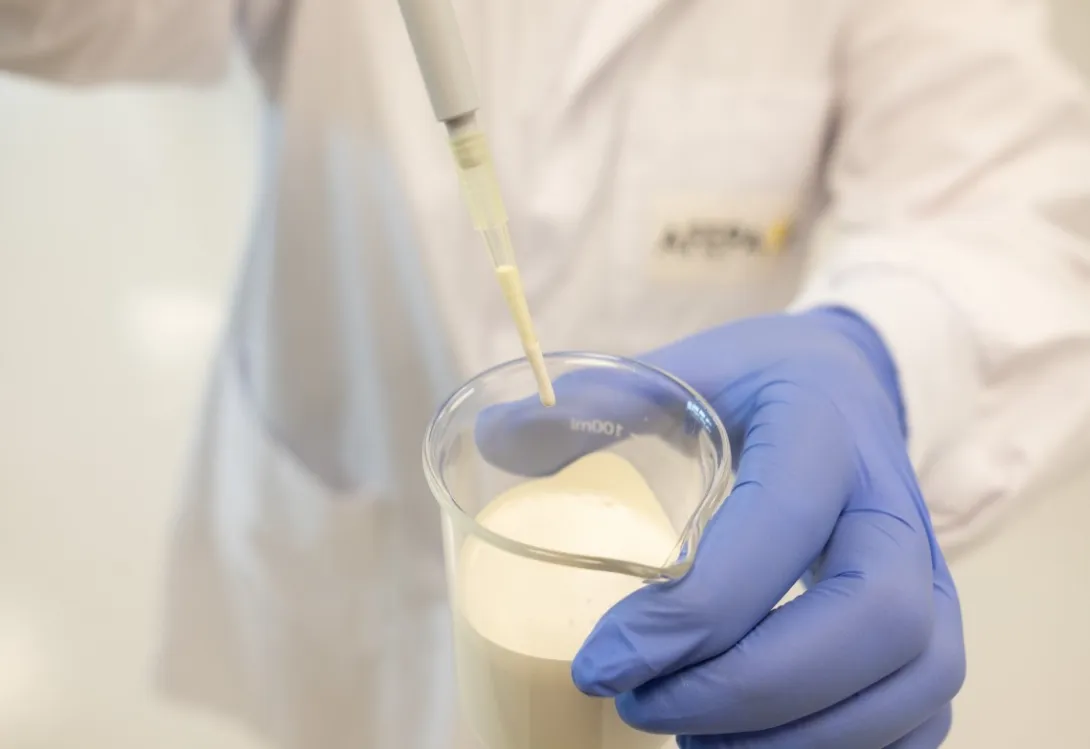
Suspension concentrate (SC) formulations are an effective and environmentally friendly solution widely used in organic agriculture. But what really makes these formulations stable, efficient and easy to apply? One of the most decisive factors is the milling process, especially wet milling—a technology that optimizes particle size reduction to achieve more homogeneous and effective products.
What is a suspension concentrate and why is it so useful in organic agriculture?
Suspension concentrates are liquid formulations in which solid active ingredients are finely dispersed in water. As they do not require organic solvents, they represent a safer and more sustainable option. Their effectiveness depends largely on particle size and distribution, since proper size reduction prevents sedimentation and improves the plant’s absorption of the active ingredient.
Wet milling: a key technology for stable and effective formulations
Wet milling has become the most efficient technique for obtaining fine and uniform particles. This process takes place in a liquid medium (usually water), together with dispersants and other adjuvants that promote a homogeneous distribution of the active ingredient.
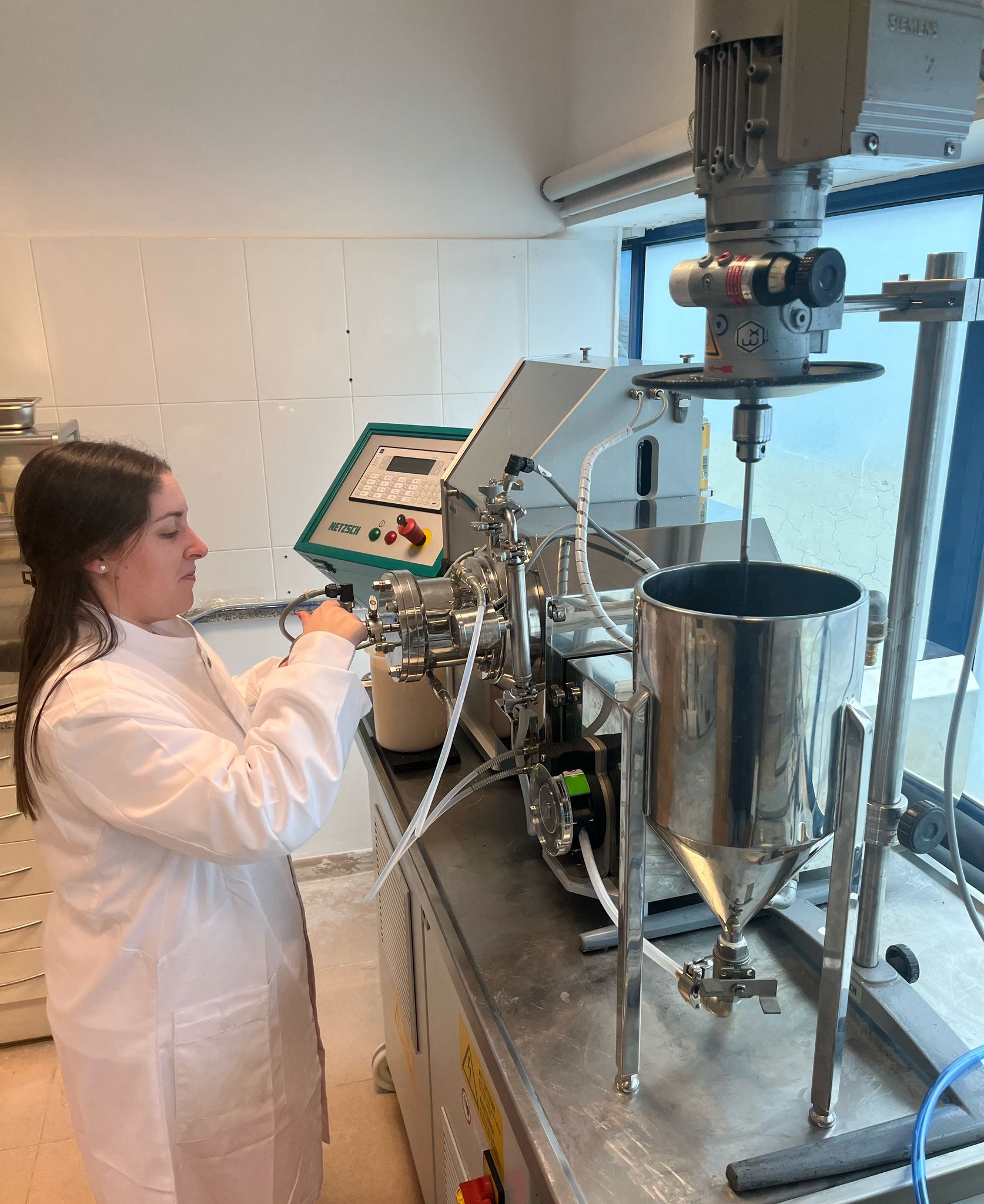
Main benefits of wet milling:
- Improved formulation stability by preventing premature sedimentation.
- Higher efficacy of the active ingredient by increasing surface area and improving adhesion to plants.
- Reduced risk of nozzle clogging, ensuring uniform application.
- Compatibility with organic ingredients, as aggressive solvents are not required.
High-precision milling technology: a step change in organic SC quality
In SC formulations, it is not just about “milling,” but about precisely controlling final particle size and maintaining a uniform distribution. For this reason, high-efficiency wet milling systems are now used, enabling finer and more homogeneous particles with a more stable process.
The result: less sedimentation, better tank behavior, more consistent application and greater batch-to-batch uniformity. In addition, working with a controlled process and lower heat generation better protects the integrity of certain ingredients—an especially relevant factor in solutions compatible with organic agriculture.
Afepasa’s commitment to sustainability and performance
At Afepasa, we apply this state-of-the-art technology to develop SC formulations that are more stable, effective and environmentally responsible. Our wet milling process, combined with the selection of high-quality organic ingredients, ensures easy-to-apply products that meet the real needs of today’s farmers.